
It’s a sound many homeowners know all too well: the faint, persistent hiss of water refilling the toilet tank, long after it was last flushed. Or perhaps you’ve been startled in the middle of the night by the “phantom flush,” when the toilet refills all by itself. While it might seem like a minor annoyance, a toilet that keeps running after a flush is a significant source of water waste. Here in Berkeley, where our older housing stock can have aging plumbing fixtures and water conservation is always a priority, a running toilet can add a surprising amount to your utility bill, especially as we head into the fall and winter months when household usage naturally increases.
Over my 14 years as a plumbing specialist, I’ve seen firsthand how a small, internal leak in a toilet can waste hundreds of gallons per day. The good news is that in most cases, the problem comes down to one of two simple components inside your toilet tank: the flapper or the fill valve. Understanding the signs can help you pinpoint the issue quickly.
Common Signs and Symptoms
Before you can fix the problem, you need to properly identify it. A running toilet isn't always obvious, but there are several clear running toilet signs our technicians train to look for. Pay close attention to what your toilet is doing - and what it sounds like.
- The Constant Hiss or Trickle: This is perhaps the most common symptom. After the tank has filled post-flush, you continue to hear a hissing or trickling sound. This is the sound of water constantly flowing into the tank, and it almost always points to a problem with the fill valve.
- The "Phantom Flush": Does your toilet seem to refill on its own, even hours after the last use? This happens when water is slowly leaking from the tank into the bowl. Once the water level in the tank drops low enough, it triggers the fill valve to turn on and refill the tank. This is a classic sign of a faulty flapper.
- Jiggling the Handle Works: If you find that jiggling the flush handle stops the toilet from running, it’s a strong indicator that the flapper isn't seating correctly. The jiggle might temporarily reseat the flapper or adjust a tangled chain, stopping the leak for a short time.
- Water Level is Too High or Too Low: Take the lid off the tank and look inside. The water level should stop about an inch below the top of the overflow pipe (the tall, open pipe in the middle). If water is constantly flowing into that pipe, your fill valve’s float is set too high or the valve itself has failed. If the water level seems low, it could be a slow leak draining the tank.
- A Weak Flush: If your toilet doesn't flush with its usual force, it could be because the tank isn't filling with enough water due to a misadjusted or failing fill valve.
What Causes This Problem
To understand how to tell flapper vs fill valve problem, it helps to know what each part does. Your toilet tank contains a simple, effective mechanism, but its components wear out over time, especially in areas with hard water or in the older homes common throughout Berkeley and surrounding neighborhoods.
The Flapper: The Tank's Drain Plug
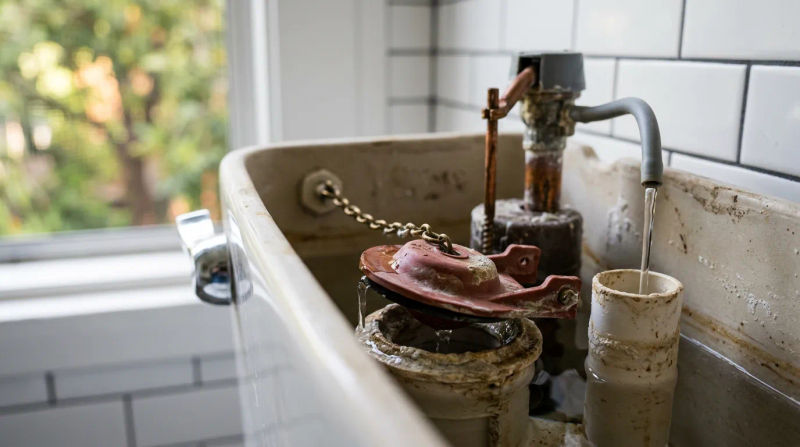
The flapper is the rubber or plastic seal at the bottom of your tank that lifts when you flush, allowing water to rush into the bowl. When the flush is complete, it drops back down, sealing the opening to let the tank refill.
Common flapper failures include:
- Deterioration: Over time, the rubber can become brittle, warped, or covered in mineral deposits. This is especially true in homes from the 1950s, like many found in San Leandro, where years of exposure to treated water have taken their toll. A warped flapper can no longer create a watertight seal.
- Chain Issues: The small chain connecting the flapper to the flush handle can be a source of trouble. If it's too short, it will hold the flapper slightly open. If it's too long, it can get caught underneath the flapper, preventing it from sealing.
The Fill Valve: The Tank's Faucet
The fill valve (also known as a ballcock) is the tall assembly that refills the tank with water after a flush. It's controlled by a float that rises with the water level, shutting the valve off when the tank is full.
Common fill valve failures include:
- Worn Internal Seals: The fill valve has several internal seals and diaphragms that can wear out or get clogged with sediment. When this happens, the valve can't shut off completely, leading to that constant toilet tank hissing sound as water continues to flow. This is a frequent cause for a toilet tank hissing sound fix.
- Float Malfunction: The float mechanism can become stuck, waterlogged, or misaligned, failing to signal the valve to shut off. This causes the tank to overfill, with excess water draining down the overflow pipe.
The Simple Dye Test
Here’s a foolproof way to determine the culprit. Get some food coloring or a dye tablet.
- Remove the tank lid.
- Add a few drops of the coloring to the tank water.
- Do not flush the toilet.
- Wait for 15-20 minutes.
- Check the water in the toilet bowl. If you see colored water in the bowl, you have a leaking flapper. The seal is broken, allowing tank water to seep into the bowl.
- If the water in the bowl remains clear but you can still hear the toilet running, the problem is almost certainly your fill valve. The valve is leaking water directly into the overflow pipe.
When to Call a Professional
Many homeowners are comfortable with basic DIY repairs. Replacing a flapper or adjusting a fill valve float are often manageable projects if you're handy and have the right replacement part.
However, there are many situations where calling for professional help is the safer, faster, and more reliable option. We recommend contacting an experienced professional if:
- The Diagnosis Isn't Clear: If the dye test is inconclusive or you've replaced a part and the toilet keeps running after flush, there may be a less common issue, like a cracked overflow tube or a worn-out flush valve seat that requires specialized tools to repair.
- You're Dealing with Old, Corroded Parts: In older homes, plumbing fixtures can be delicate. A shut-off valve behind the toilet that hasn't been turned in decades might be frozen or break if forced. Our technicians have the experience and tools to manage these fragile situations without causing a flood.
- The Problem is the Fill Valve: While some homeowners can replace a fill valve, it is a more involved process than changing a flapper. It requires shutting off the water, draining the tank, and working with water supply connections. An improper installation can lead to leaks outside the toilet.
- You Want Peace of Mind: A running toilet is a nuisance. Having a qualified professional diagnose and fix it correctly the first time saves you time, prevents multiple trips to the hardware store, and ensures the repair is durable. Our crews follow standardized processes to ensure every repair is done right.
Conclusion
A running toilet is more than just an annoying sound; it's a constant drain on your water bill and a waste of a precious resource. By listening for the key running toilet signs like hissing or phantom flushes, you can get an early warning. Using a simple dye test can help you quickly determine whether the flapper or the fill valve is the culprit.
While some fixes are simple, don't hesitate to seek expert help for more complex issues or if you're dealing with the aging plumbing often found in our local homes. Acting early not only quiets the noise but also saves water and money, which is a smart move for any homeowner.
If you notice any of these signs, contact a local plumbing professional for an inspection.