
You flush a toilet upstairs, and a moment later, you hear a strange gurgling sound coming from the shower drain nearby. Or perhaps you've noticed that running the washing machine causes the kitchen sink to drain slower than usual. These subtle clues are easy to dismiss, especially during a busy Berkeley summer. However, they often point to a single, frequently overlooked problem: a blocked plumbing vent.
Your home’s plumbing system is more than just pipes that carry water away; it's a complex network that needs to breathe. Every drain is connected to a vent stack, a pipe that typically runs through the walls and exits through the roof. This vent allows air to enter the system, equalizing pressure and enabling water to flow smoothly. When that vent gets blocked, your entire drain system can start to misbehave. Here in the East Bay, July's dry conditions and peak fire season bring unique risks, as wind-blown debris and ash can easily create a Berkeley roof vent blockage.
As a specialist with over 14 years of hands-on experience in homes across the area, I've seen firsthand how a simple vent clog can cause significant disruption. Understanding the signs can help you address the issue before it leads to bigger problems.
Common Signs and Symptoms
A clogged plumbing vent doesn't always present itself in an obvious way. The symptoms can be intermittent or seem unrelated at first. Here are the most common signs our technicians encounter.
- Gurgling Drains: This is the classic symptom. The gurgling drain meaning is straightforward: your plumbing is gasping for air. When water flows down a drain, it needs to displace the air in the pipe. If the vent is blocked, the system will pull air from wherever it can, which is usually the nearest P-trap. That gurgling sound is air being violently sucked through the water seal in your drain trap.
- Slow Drains in Multiple Fixtures: A single slow drain often indicates a local clog in that specific fixture's pipe. But when you have slow drains multiple fixtures - for example, the bathroom sink, shower, and toilet all drain sluggishly - the problem is likely further up the line. A blocked main vent affects every fixture connected to it, creating widespread drainage issues.
- Sewer Odors Inside Your Home: The P-traps under your sinks and the water in your toilet bowl are designed to create a seal that blocks sewer gas from entering your home. A blocked vent creates negative pressure (a vacuum effect) that can siphon this water out of the traps, breaking the seal and allowing unpleasant and potentially harmful odors to seep into your living spaces.
- Bubbling Toilet Water: Have you ever run the bathroom sink and noticed bubbles rising in the toilet bowl next to it? This is another sign of negative pressure. The air, unable to escape through the roof vent, is forced back up through the nearest and largest opening, which is often the toilet.
- Poor Flushing Power: A toilet that requires multiple flushes or doesn't seem to have the same powerful swirl it once did could be suffering from a vent issue. Without proper airflow, the vacuum effect can hinder the water's ability to exit the bowl efficiently.
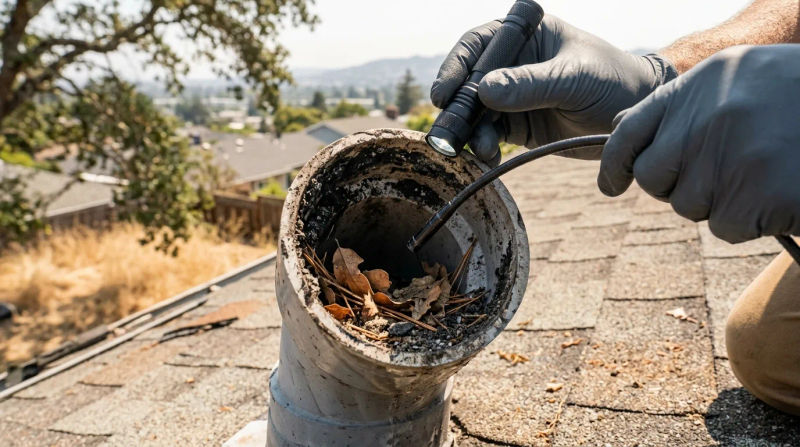
- Visible Debris on the Roof: From the safety of the ground, you may be able to see leaves, twigs, or even a bird's nest accumulating around the vent pipe on your roof. During Berkeley's dry season, wind and the shedding of eucalyptus trees contribute a steady stream of debris. After periods of high winds or nearby wildfires, a layer of ash can also contribute to a blockage.
What Causes This Problem
Understanding what causes a plumbing vent to clog can help you anticipate and prevent issues. The Drain-Waste-Vent (DWV) system is robust, but the vent's rooftop opening is exposed to the elements.
In Berkeley and the surrounding East Bay, the primary culprits we see during summer are environmental:
- Leaves and Pine Needles: Debris from nearby trees is the most common cause. It gets washed into the vent opening by rain or blown in on dry, windy days.
- Wildfire Ash and Soot: During peak fire season, fine ash can travel for miles and settle on roofs. When mixed with a little morning dew or moisture, this ash can form a hard crust over the vent opening, effectively sealing it shut.
- Birds and Rodents: Small animals sometimes see a plumbing vent as an ideal place to build a nest or hide from predators. Their nesting materials can create a dense, stubborn plug.
- Debris on Complex Roofs: Many homes in the region, especially those built in the 1990s and 2000s in neighborhoods like Alamo, feature large, complex rooflines with multiple gables and hips. These architectural styles, while beautiful, can create valleys and corners where leaves and debris collect, making it more likely for that material to wash down and obstruct a nearby vent stack.
In rarer cases, a blockage can be caused by frost in colder climates (not a concern for Berkeley summers) or issues with the original installation, but environmental factors are by far the most common cause we address.
When to Call a Professional
While identifying the signs of a clogged plumbing vent is a great first step, resolving the issue is typically a job for experienced professionals. The primary reason is safety. Clearing a vent requires getting on the roof, which carries a significant risk of falling, especially on the high-pitched, complex roofs common in many modern homes.
Our technicians are equipped with the proper safety gear and training to work on roofs securely. We follow standardized processes to ensure every job is done safely and effectively. Here’s what you can expect from a professional inspection:
- Safety First: The first step is always a safe and secure assessment of the roof and the vent's location.
- Visual Inspection: We start by visually inspecting the vent opening for obvious blockages like leaves, nests, or debris.
- Advanced Diagnostics: If the blockage isn't visible at the top, it could be further down the pipe. We can use a specialized plumbing camera to inspect the entire length of the vent stack from the roof down. This allows us to pinpoint the exact location and nature of the clog without any guesswork.
- Effective Clearing: Once diagnosed, the blockage can be cleared using professional-grade tools. A plumber's auger (or snake) can often break up the clog. For more stubborn blockages, like compacted ash or organic matter, we may use a hydro-jetter, which uses high-pressure water to scrub the inside of the pipe clean.
Attempting a DIY fix can not only be dangerous but may also be ineffective. Pushing a garden hose down the vent can sometimes compact the blockage further or introduce water where it shouldn't be. A qualified professional can distinguish between a simple vent clog and a more serious issue in the main sewer line, ensuring the correct problem is fixed the first time.
Conclusion
Your home's plumbing system relies on proper airflow to function correctly. Gurgling drains, persistent sewer odors, and multiple slow-draining fixtures are more than just minor annoyances - they are clear signals that your system is struggling. Here in Berkeley, the summer and fall seasons bring an increased risk of a Berkeley roof vent blockage due to dry, windy conditions and airborne debris.
Paying attention to these early warning signs and acting promptly can prevent water from being siphoned from your P-traps, stop sewer gas from entering your home, and restore your drains to their full function. Don't wait for a complete backup to occur, especially when you might be hosting summer gatherings or planning to be away from home.
If you notice any of these signs, contact a local Plumbing professional for an inspection. A trained expert can safely and accurately diagnose the problem and ensure your home's plumbing system is breathing easy once again.